“We truly believe T2 MacBooks can make the best Linux laptops.”

None

“KAIT2EN is meant to disappear. Every module and fix that gets upstreamed leaves the repo.”

None

“There is a distinct difference in making broken things work and fixing things.”

None
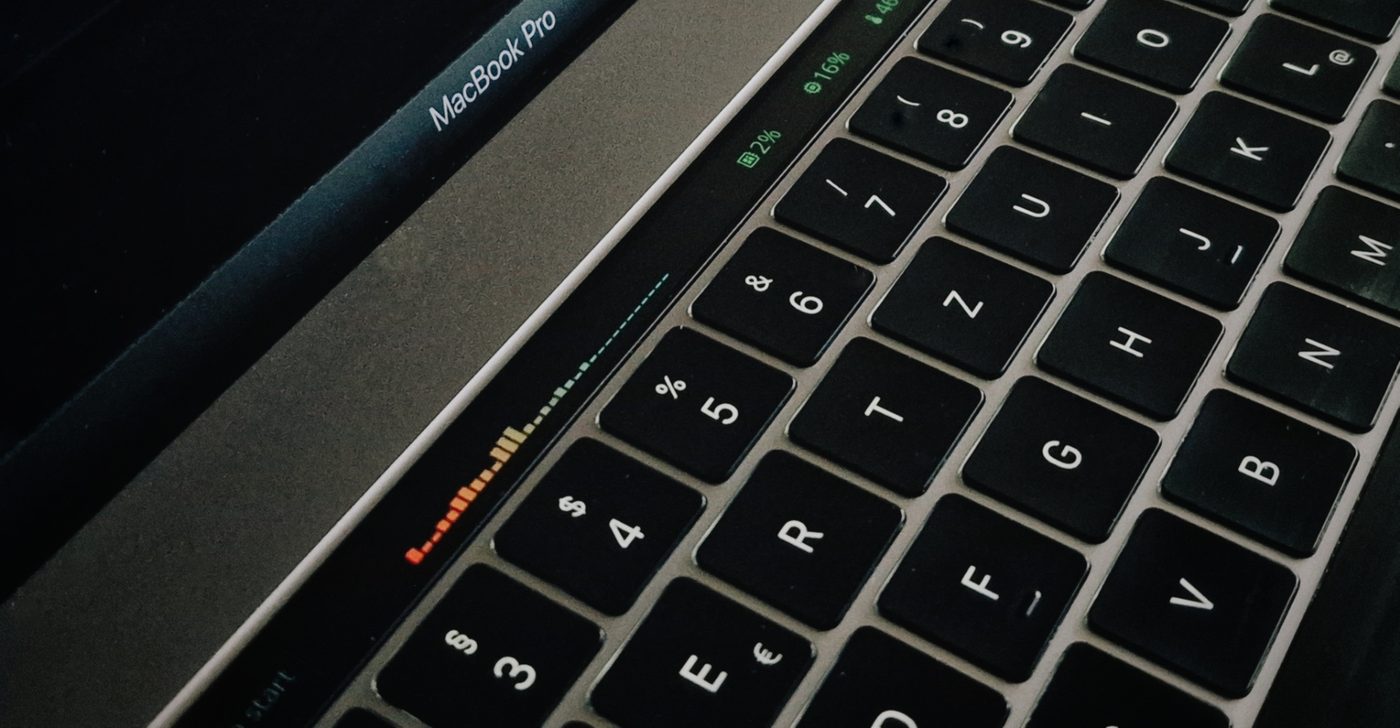
Touch Bar and keyboard of a MacBook Pro running KAIT2EN Fedora

You Run It, We Fix It.

We bring Linux to your T2 Mac with instant driver fixes, straight from the developers.

Vanilla Fedora. DKMS modules. Aimed upstream.

Features & status

What works today, and what is on its way into mainline Linux.

Status
Upstream
FeatureStatusUpstreamUpdated
Thunderbolt device linksMaintainers did not accept v7. The three-patch v8 series moves Apple device-link discovery into the Thunderbolt PCI code and adds Titan Ridge and Ice Lake support separately.Linux kernel · Thunderbolt · v8 · @ruiCON, @deqrocksIn progress
Wi-Fi PM_MAX power managementWithdrawn after extended BCM4364 testing found intermittent 50-250 ms latency spikes with PM_MAX. PM_FAST remains the driver default.Linux kernel · Wi-Fi / brcmfmac · v3 · @4f1sh3rIn progressWithdrawn
Audio DSPHelp wantedSpeaker protection and FIR filter profiles that make the internal speakers usable at full volume. Tied to Apple's hardware, so this stays downstream.🙋 FIRs from machines not yet supported.KAIT2EN Fedora · t2bce_audio · @deqrocksIn progressDownstream only
Package C-statesHelp wantedGetting the platform into deep package C-states so idle power draw and battery life come closer to macOS.🙋 Powertop and turbostat readings from different T2 models.KAIT2EN Fedora · Power management · @deqrocksIn progressDownstream only
Keyboard backlight after re-enumerationThe backlight did not come back on after the keyboard re-enumerated.upower · @deqrocksIn progress
Thunderbolt controller stays powered (15,1)The original xHCI patch was withdrawn after native PCIe port services restored USB 3 hotplug from runtime D3. Further testing found a separate system-resume regression: allowing the Titan Ridge xHCI controllers and their ports into D3 delays EC interrupt unblock by about 20 seconds. Kait2en therefore retains the D3 restriction downstream while the proper upstream fix is investigated.Linux kernel · USB / xHCI · v1 · @deqrocksAvailableWithdrawn
Fast CPU restore after suspendMoves secondary CPU hotplug outside the generic CPU PM notifier window on Apple T2 systems, avoiding multi-second delays per CPU during resume.Linux kernel · ACPI / CPU hotplug · v1 · @deqrocksAvailable
Hybrid graphics and dGPU power managementRuntime GPU switching is available downstream on MacBookPro15,1. The apple-gmux, amdgpu and ALSA HDA changes were submitted upstream as v3.KAIT2EN Fedora · t2gmux / amdgpu · v1 · @byte, @deqrocksAvailable
Touch Bar suspend and resume without PM deadlockAvoids nested runtime PM references in the HID callbacks that could stall Touch Bar suspend and resume.Linux kernel · HID / Touch Bar · v1 · @deqrocksAvailable
Touch Bar control center (react-drm)Replaces the standard Touch Bar interface: function keys, media and brightness controls, application-aware panels and system information.KAIT2EN Fedora · t2bdrm / react-drm · @deqrocksAvailableDownstream only
Display brightness restored after rebootThe backlight had no stable path ID, so the brightness setting was lost on every reboot.systemd · udev · @deqrocksAvailableMerged
Volume slider without DSP cracklingDragging the Quick Settings volume slider caused audible crackles on PipeWire DSP sinks.GNOME Shell · Quick Settings · @deqrocksAvailableMerged
Fn double press switches F-keys and media controlsLinux kernel · HID / Touch Bar · v3 · @AdityaGarg8, @deqrocksAvailable
dGPU wakes up on MacBookPro15,1The SMU was dead after resume, leaving the discrete GPU unusable.Linux kernel · PCI / amdgpu · v1 · @FrederickGeek8, @deqrocksAvailableMerged
Keyboard backlight after resumeThe butterfly keyboard backlight came back on at 0% after resume, and now uses the same LED naming as the magic keyboards.Linux kernel · HID / Input · v1 · @deqrocksAvailableMerged
Keyboard backlight brightness levelsThe backlight reports were parsed with the wrong endianness.Linux kernel · HID / Input · v1 · @deqrocksAvailableMerged

Concept

This Is Not Easy to Explain#

This one is a bit of a read. But while writing, I discovered that non-nerds wouldn't even understand what I'm talking about without knowing the context. You can skip this if you want. But for many this may be valuable information.

The Linux mainline kernel still lacks drivers for certain T2 hardware components. The thing with T2 drivers is that they require reverse engineering. Which is particularly difficult on Apple hardware because Apple stuff is "thought different". There are not many developers who still deal with T1/T2 hardware on Linux. Many moved on to Apple Silicon for understandable reasons.

The flow usually is that someone writes a driver by reverse engineering. In the best case a community would test it and then it would be submitted to upstream maintainers to check and merge. After that the driver would live in the Linux kernel. And that means you can just install vanilla Fedora, Ubuntu, Arch or whatever and the kernel will support your hardware natively.

Some T2 drivers indeed went that way. Some are still missing. And these are the most complex drivers. Because of their complexity they are not easy to upstream. The devs who wrote them knew there were still issues with the code and its architecture. Upstreaming a driver like that would create plenty of friction and work. That's like squeezing it in. So they tried and failed or even never tried.

Upstreaming Apple stuff is difficult. Because it's unconventional hardware. It needs a lot of explaining why the code is like it is.

Going Upstream = Moving Against The Flow#

Traditional distros like CachyOS or T2Linux work around this by shipping patched kernels. The patches are not created by the distro people. T2Linux collects the code we talked earlier about and maintains it in a GitHub repo. Also KAIT2EN provides some patches to that repo. Like t2bce and audio drivers. Then these patches are compiled against the current kernel. This means they integrate the drivers into the latest release. Distros like CachyOS or Omarchy make use of the same T2Linux patches and also integrate them in their kernels.

Should be all good, right? You just choose your favorite distro and done. The problem is that most devs stopped upstreaming their patches to the mainline Linux kernel. Instead they submit their patches to the T2Linux patches repo.

This has some downsides.

  • T2Linux would need to maintain the patches forever.
  • You will lose the safety of the standard distribution kernel.
  • Kernel updates are delayed.
  • You are not talking to the actual developer when you file an issue.
  • When T2Linux stops maintaining, T2 Macs will stop working on Linux.

Since we are currently the provider of some of these missing drivers, we know that getting updates into external distros takes time and can be difficult. Many third-party maintainers also naturally lack deep T2-specific context, making regressions more likely. The informational flow or communication can be difficult when breaking changes are introduced. Maintainers have to deal with incredibly complex workflows. The more you go upstream, the more complex it gets.

With KAIT2EN we jump over the middlemen. It is a unified platform. We take care that it works on your Mac. So we know your hardware, your command line, your drivers, your systemd units, your udev rules, etc. Users can test, talk to devs directly and we can submit to upstream. Third-party maintainers can choose to package our code or just profit from upstreamed patches. Devs can directly PR to us.

Stream Me Up, Linus!#

So KAIT2EN is specialized exclusively for T2 Macs. We deliver T2 drivers and dedicated T2 utilities. For you this is like cherry-picking: standard upstream kernels directly from Fedora, combined with immediate hardware fixes straight from us. Yummy!

Because we rely on out-of-tree modules, we can test and iterate without full kernel recompilations. This streamlined architecture lets us roll out fixes and handle feature requests in minutes. Literally. All while working toward our goal, which is upstreaming every driver into the official Linux kernel, while dropping them downstream. This means, when we are done, T2 people can install Linux from official sources just like everyone else. And specialized distros or repos that are scattered all around the interwebs are no longer needed to maintain the code.

Yes, We Know There Is Apple Silicon#

But someone needs to close the gap! We truly believe T2 MacBooks can make perfect Linux laptops. Once everything is properly fixed, models like the MacBook Pro 15,1 or MacBook Air 9,1 run cool, offer great battery life, and cost very little. All while keeping Apple’s exceptional build quality, Retina displays, and Touch Bar. (Mentioning these two models specifically, because they are running perfectly on KAIT2EN. Also the 15,2 does. Generally 16,x MacBooks are more problematic).

So this is x86 architecture and we won't get anywhere near to what Asahi with Apple Silicon can do. But the message is not to buy into T2 Macs. It's about making them usable and using them sustainably. If you already own a T2 Mac, you will appreciate it. Because you know and we know that this era of devices was always kinda "meh!". Even at the time. But on Linux they are great. Even the "portable egg fryer" MacBook Air 9,1 is.

And actually, before Apple began with their security chip shenanigans, Apple computers have always been great for Linux. Let's put butterfly keyboards, flexgate, staingate and whatnotgate aside now. They are still sexy. Aren't they? And if you can get hold of one for cheap for study or travel, you will appreciate when you just can run Linux on it natively. Without the need of reading half the Internet about how to make it work. Somehow.

Is The Grass Greener On The KAIT2EN Side?#

Our grass is KAIT2EN red. There is a lot of discussion and arguing involved when you want to get things moving. It's the sound of grinding gears while trying to find solutions for everyone. We move fast, and our frequent update cycle might feel relentless and annoying. Staying informed means following announcements in our Discord community or checking GitHub for updates. We wouldn't recommend KAIT2EN to total Linux noobs. But we are surprised to see how fast people grow with new tasks.

Updating is entirely up to you, but KAIT2EN is built for active testing, not passive convenience. If you want to call us opinionated, then this is your chance. We share this project because we need real-world testers to validate our fixes on a base we know. Not updating will lead to a non-working Mac when outdated DKMS modules stop compiling against an updated kernel that contains new symbols.

This is something you should keep in mind before jumping in.

Install KAIT2EN

The installation starts in macOS and continues in Fedora.

macOS Terminal
curl -fsSL https://github.com/kaiT2en/KaiT2en-Fedora/releases/latest/download/install-kait2en-fedora.sh | bash

Run this in macOS with an empty USB drive attached. The script downloads and verifies the official Fedora image, collects the Apple firmware from your Mac and writes a bootable installer.